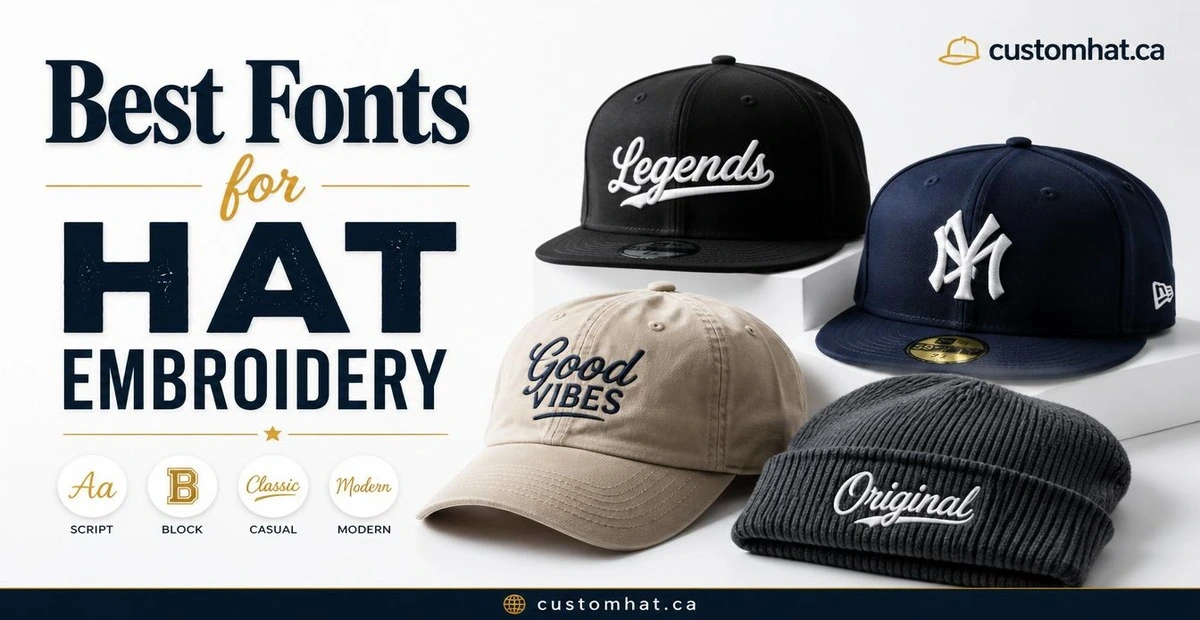
Best Fonts for Hat Embroidery (That Actually Look Good)
Do you want to waste your budget on weak fonts that would be immediately damaged by your sewing machine? Learn the structure font guidelines to make your customized headwear look truly high-end.
Creating A Professional Look Through Better Typography
The design of a great hat isn’t only about the logo or artwork. The choice of font can either make your hat look professional or make it hard to read.
Many designs appear great on a computer screen, but don’t translate so well to fabric when stitched.
There are some restrictions with hat embroidery. So it’s very crucial to select an appropriate font in the design process.
From hats for businesses, sports teams, events, or clothing, choosing embroidery-friendly fonts can make the hat look clean, sharp, and easy-to-read.
Explore the fonts that work best on embroidered hats and which ones will look fantastic in the actual application.
Make All Stitches Easier To Read From A Distance
A major objective of embroidery is to make the work stand out. The beauty of a hat design is lost if people can’t read the text easily.
Simple, well-spaced fonts work well, while fancy ones don’t. The use of clean typography makes it easier for embroidery machines to create letters and words with a clean and legible appearance.
Sans-serif options like Helvetica, Montserrat, Arial, etc. are still in trend as they have strong lines without unnecessary details.
These fonts stand out even when embroidered in smaller sizes.
Don’t Let Small Details Slip Away In Production
Embroidery thread is much thicker than ink. This can cause small design details to be unclear or disappear completely during the stitching process.
Thin-stroke, decorative, and detailed fonts are prone to being difficult on hats. Things that look lovely on a website can be hard to identify once they’re embroidered.
Medium weight or bold font can be used to help maintain character shapes. Consistent letterforms produce clearer stitch paths and more consistent production runs.
Choose fonts that are still easy to identify once they’ve been converted from digital artwork to thread.
Match Font Styles To Popular Hat Trends
Various hat styles can affect font choices. Some materials work well with one hat but may not be suitable for another.
For instance, bold fonts can be a great choice for modern trucker hats styles since the front of the hat is large enough to make impactful graphics. These hats are often employed for fashion brands, exterior businesses, and promotional items.
When looking for options like custom cowboy hats near me, it’s also important to consider how the hat style and design work together.
The size of the font should match the hat shape to create a balance and pleasing design.
The best designers don’t pick the font first and then think of the hat; they consider both elements in their branding strategy.
Design A Premium Look Without Overcomplicating
Many high-end brands have the simplicity rule. The basic embroidered font may appear costlier than an intricate design.
Modern fonts like Futura, Gotham, and Proxima Nova give a modern feel while remaining easy to read. Their structure enables logos and text to stand out naturally, with a balance.
When businesses are making promotional hats, they tend to focus more on professionalism than on decoration. Using the simplest font helps to convey confidence, reliability, and quality.
That’s why many successful brands are still sticking with classic font styles instead of following fleeting design trends.
Versatility is another aspect to consider.
A font that is well suited for one style of hat should perform well in various product lines. This versatility allows brands to keep a consistent look and grow the variety of their products.
Many businesses that work with a custom hat company in Canada prefer flexible font styles as they can be used in their branding for baseball caps, trucker hats, beanies, and promotional hats.
Choosing a flexible font can help save your time and ultimately save your money for redesigns later on.
The most successful branded collections are built around fonts that look great on every application and material they are used for.
Use Bold Fonts Wisely In Design
Bold fonts continue to be one of the safest fonts to embroider.
They have thicker strokes, which produce good contrast and readability. They also provide embroidery machines with more space to produce clean stitching.
Fonts like Impact, Bebas Neue, and Oswald work great with bigger text sizes. Usually, these are the ones that are used for company names, sports teams, and promotional campaigns.
Large fonts can also be used to mask the natural texture of embroidered thread, so designs can be seen from various distances.
Add Character While Maintaining A Professional Look
Not all hat designs have to be functional. There are occasions when personality has a big part to play.
Older styles of fonts, slabs, and retro can give a nice, warm, and special look, without sacrificing readability. Finding balance between character and functionality is the key.
Some fashion brands that produce custom fedora hats mens have special typography to strengthen their visual identity by keeping embroidery clean and readable.
The right choice of font can convey heritage, creativity, wealth, or innovation, without the need for any extra design features.
This enables the typography to become a recognizable element of the brand experience.
Minimize Production Problems Using Embroidery-Friendly Fonts
An effective font choice not only looks good, but it also saves manufacturing time.
Some fonts have smoother stitching, fewer adjustments, and more consistent quality. This minimizes thread breaks, uneven stitching, and production delays.
Some of the top embroidery companies recommend specific fonts that have worked well in many embroidery projects. All of these tried options have the same results and are safer.
This leaves the final product cleaner and the production process easier to follow through.
People will be more inclined to wear hats that seem fashionable and professional.
Customers perceive the product as more valuable when its typography is clear, balanced, and visually appealing. This boosts the chances of the brand getting more exposure as it continues to be used again and again.
Many businesses that work with a custom trucker caps company pay special attention to the font they use because it is typically the central design element of embroidered caps.
A good font makes a hat a product people will really want to wear, not just use to promote.
Answering Top Concerns About Appropriate Fonts For Hat Embroidery
Which styles of fonts are suitable for hat embroidery?
Typically, simple sans-serif and bold fonts work best, as they can be easily read, clean, and consistent after the embroidery is produced.
Why are certain fonts not suitable for embroidery?
Small details, thin lines, and decorative elements may be lost or merged in the stitching process, making the overall readability more difficult to achieve.
Can script font work for embroidered hats?
Yes, simplified script fonts with bigger letters give a better result and are clearly visible after stitching.
What is the best size to use for the font in hat embroidery?
Generally, fonts are best kept large enough to be embroidered clearly and read at a reasonable distance from the design.
Is it better to have the same font on branded merchandise?
Consistent typography enhances brand recognition, creates visual unity, and makes your products easily identifiable by your customers.
Conclusion
The most decorative or complicated fonts are not necessarily the best for hat embroidery. They are the fonts that are easy to read, attractive, and clear after being stitched onto fabric.
Clutter-free sans-serif fonts, bold typography, and well-selected vintage designs always work beautifully.
With a focus on readability, stitch quality, and versatility, companies and brands can produce embroidered hats that will be professional and durable. Take a little more time to consider fonts before deciding on the next hat design. The font used is a significant aspect that greatly influences the overall appearance of a hat.

Sofia bennett has always loved hats the way a great cap can complete a look or represent a team, club, or brand. At CustomHat.ca, they share tips, ideas, and inspiration to help anyone design custom hats that actually stand out. From embroidered logos to unique designs, they enjoy exploring new styles and seeing how people put their own twist on headwear. When not writing about hats, you’ll probably find them sketching new designs, trying out fresh materials, or helping someone bring a tricky hat idea to life. Their goal is simple: make creating custom hats fun, easy, and full of personality.