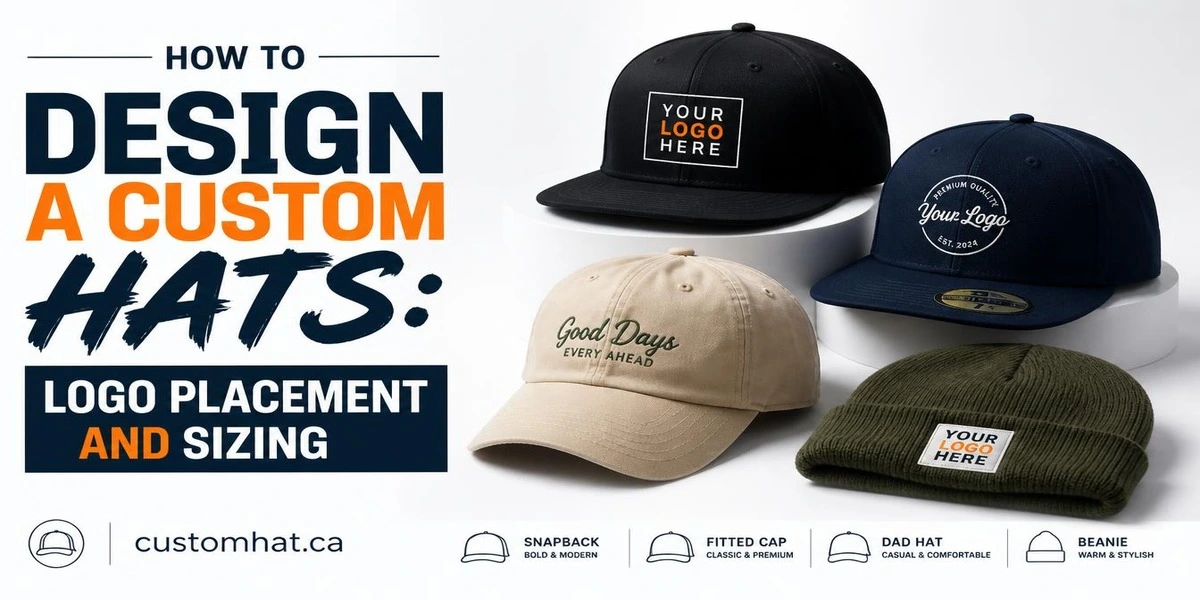
How to Design a Custom Hats: Logo Placement and Sizing
Are you aware of any product that is ideal for multiple purposes like marketing, branding, functionality, and personal fashion taste? It is certainly none other than custom hats that remain in daily use for years, turning customers into employees, and enhancing the fashion taste of fashion-forward individuals.
But having a ready-made one, instead of a customized one, does not satisfy those who are actually using them for some specific purposes. Those that are not made with the proper design consideration often end up looking very basic, and the final result is not able to reach the right audiences. This is why a buyer, especially, needs to understand how these intricacies work and what the significance of logo placement and sizing is.
Why Are Custom Hats More Than Promotional Products?
The function of custom hats has come a long way from being offered as gifts.
How Do Hats Deliver Long-term Brand Visibility?
Hats are a different kind of promotional product as they go wherever people go and are not usually left on desks or in storage. They are worn at sporting events, outdoor activities, trade shows, and everyday errands, and are always introducing a brand to new audiences without extra marketing expenses.
What Is the Purpose of People Wearing Them?
The best custom caps are more like fashion accessories than promotional products. Attractive and comfortable designs make people wear them, not simply because they are asked to do so.
How Do Hats Work for Other Industries?
Hats are versatile and worn by a variety of businesses, including restaurants, construction firms, sports teams, schools, charities, and retail brands. Their versatility makes it possible for businesses to reach their customers in a useful, memorable way.
How Is a Custom Hat Actually Made?
Designers actually need to understand the production if they want to make proper decisions.
Step One Is Choosing the Hat Style
The first step in the process is to select the hat design. There are many different decorative spaces and effects that each snapback hat offers, such as the trucker hat, fitted hat, dad hat, beanie, or cowboy hat.
Next, the Art Is Prepared for Printing on Step Two
Designers prepare a logo for printing. This stage will decide if embroidery, patches, screen printing, or heat transfer methods will yield the best results.
Step Three Provides Options for Decoration
Embroidery is also a very popular choice for custom hats, as it is durable and gives a higher-quality look. Manufacturers can employ various techniques such as direct embroidery, woven patches, leather patches, or printed graphics, depending on the design.
Quality Inspection Comes in Step Four
Hats are checked for alignment, stitching, colour matching, and sizing accuracy before shipping. Any little mistake could result in a complete loss of the look of the finished hat.
What to Consider Before Ordering Custom Hats?
Who Will Wear the Hat?
Designs for use by corporate employees may be different from those that are designed for a youth sports team. Knowing your audience will help you decide on style, colour schemes, and branding.
Where Will the Hat Be Worn?
When it comes to outdoor wear, visibility and durability might be top concerns. When it comes to lifestyle brands, they might focus on fashion. Almost all design decisions are affected by the context.
What Is the Level of Complexity in the Logo?
Embroidery might not do an adequate job of reproducing intricate logos with small text or detailed illustrations. Sometimes the result is enhanced by the simplicity of some parts.
What Is the Production Method?
There are pros and cons to each of the different decoration techniques. Artwork should not be designed with the needs of production in mind, but rather with the needs of production factored into the design.
Where to Put a Logo on a Custom Hat?
Many times, the quality of hats depends on the logos placed on them.
What Is the Effect of the Shape of the Hat on its Positioning?
Structured hats, beanies, and curved hats each carry their logos in a different way. Custom beanie hats in Canada, for instance, may suggest that the logos on beanie hats should be situated in the center since they tend to get distorted when positioned on the side of the hat and can stretch while in use.
Would the Front Panel Always be the Best Choice?
The front center is still the most common spot, as it offers the best visibility. It is great for business logos, sports teams, and retail brands that need quick brand recognition.
When Is Side Placement More Effective?
It is a versatile and popular method with lifestyle and fashion brands for side placement for a subtler look. It allows the hat to be less promotional but still be present as a brand.
What About the Back of the Hat?
Back placement happens to be used for secondary branding, websites, slogans, or social media handles. It is used in addition to the main logo.
Are Multiple Placement Areas available?
Yes, but there is a need to have control. A hat that is over-branded can get clumpy. Efficient designs tend to be one branding element that has a main element.
Why Does the Size of the Logo Really Make a Difference?
Bigger does not always mean better, and a logo that is technically correct but not visually effective can ruin the impact of the design.
What Happens if a Logo is Too Small?
As the size of the logo gets smaller, they tend to become blurry and hard to see from afar. Fine text may not be legible, resulting in less brand value.
How a Logo Can be an Issue if it is Too Large?
Large logos will overpower the shape of the hat. Boldness on the digital mockup may look out of proportion in real life.
How to Think About Scale as a Designer?
Do not ask the size of a logo, but rather its share of visual attention. Often, how much is enough is the key to strong branding.
What Effect Might Various Hat Styles Have on Design Decisions?
- Designing for Beanies
Not all hats are made according to the same design guidelines. If we talk about the beanies, they have a very limited decor space, as the fold-over cuff is normally the main branding space. It is best if the logo is simple.
- Designs for Snapbacks and Structured Caps
These hats offer wide front panels, which are suitable for detailed embroidery and patch applications. They are one of the most customizable options in the branding arena.
- Designs for Western-Inspired Hats
It is common for businesses to order custom cowboy hats in Ontario without a big embroidered logo, since that is usually their initial concern for leather patches or metal badges. The aim is typically to add to the personality of the hat.
What Are the Ways to Test a Design Before Production?
Make Mockups from Various Directions
Only the front view perspective can mask spacing and proportion problems. Side and rear views give a better idea of how the finished product will look.
Read the Design at Actual Size Page
Digital art can be confusing when viewed close up. Be sure to print the logo at production size to check if any details are not visible or legible.
Ask for Input from Non-Designers
Designers tend to concentrate on the technical aspects while neglecting actual impressions. Potential customers can get a sense of the attractiveness and wearability of the design pretty quickly.
FAQs
For personalized caps, is embroidery preferable to printing?
The embroidery is actually long-lasting and produces a high-end look, and it is chosen most of the time. Highly detailed artwork, however, might be more appropriate for printing.
Is it possible to put several logos on a single hat?
Yes, however, the design may appear crowded if there are too many branding components. One main logo and a tiny secondary component make up the majority of successful caps.
How can I determine whether my logo is perfect for embroidery?
Logos with distinct shapes, few fine details, and understandable text often yield the finest embroidered results, though a manufacturer can assess the artwork.
How big should the logo on the hat be?
The style and ornamentation technique of the hat determine the appropriate size. The logo should not overpower the design, but it should be big enough to be seen.
Conclusion
Designing a bespoke custom hat includes much more than uploading a logo and selecting a colour. Every decision, from the shape of the hat to the size and placement of the branding, affects how the end product will look, feel, and perform in the real world. The best personalized hats strike a balance between wearability and visibility. They are comfortable enough that people actually want to wear them, and they effectively convey a brand without overpowering the design.

Sofia bennett has always loved hats the way a great cap can complete a look or represent a team, club, or brand. At CustomHat.ca, they share tips, ideas, and inspiration to help anyone design custom hats that actually stand out. From embroidered logos to unique designs, they enjoy exploring new styles and seeing how people put their own twist on headwear. When not writing about hats, you’ll probably find them sketching new designs, trying out fresh materials, or helping someone bring a tricky hat idea to life. Their goal is simple: make creating custom hats fun, easy, and full of personality.